Drawing Maps: Geography Skills From a Pencil
Drawing maps teaches kids direction, scale and how places connect. Try these map-drawing activities, from a bedroom map to an alien planet.
Drawing maps teaches kids geography skills like direction, scale and the idea that a small picture can stand for a big place. When a child maps their bedroom, their street or an imaginary planet, they learn to think about space from above, which is the foundation of map reading.
Maps are one of the oldest kinds of drawing. They are also one of the most useful. A child who can read and draw a map understands where they are in the world.
What map drawing teaches
- Bird's-eye view. Imagining a place from above is a big mental leap for young children.
- Symbols. A small square can mean a house; a blue line can mean a river.
- Direction. Left, right, near, far, north and south.
- Scale. A big park becomes a small shape on paper.
- Routes. How to get from one place to another.
Start close to home
Begin with places your child knows well:
- Bedroom map. Draw the bed, door, window and toy box from above.
- Home map. Add each room and draw the path to the kitchen.
- Neighborhood map. Draw your street, a friend's house and the park.
- Treasure map. Hide a toy and draw a map with an X.
Then go out of this world
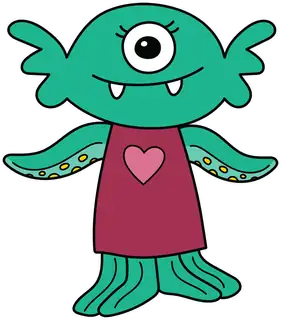
Imaginary maps are where map drawing gets really fun. Ask your child to invent a planet and map it: where the aliens live, the purple ocean, the volcano made of jelly. How to Draw: Silly Aliens gives them a cast of goofy, many-eyed residents to populate their world. Draw a few aliens, then give each one a home on the map. Suddenly your child is creating a legend, inventing symbols and thinking about distance, all while laughing.
Connect to real geography
Once kids have made their own maps, real maps make more sense. Look at a map of your town together and find symbols they recognize. Look at a globe and find where the oceans are. Talk about how mapmakers decide what to include and what to leave out.
Build a world, then tell its stories
Map drawing leads naturally to storytelling. Who travels across the planet? What happens at the volcano? For a bigger project, see world-building for kids.
Questions parents ask
Why should kids draw maps?
Drawing maps builds spatial thinking, an understanding of symbols, direction and scale, and helps children understand where places are in relation to each other.
At what age can children draw maps?
Children as young as 4 can draw simple maps of a room with help. By 6 to 8, most can draw a neighborhood map and use simple symbols and a key.
What is a fun map activity for kids?
A treasure map game, where kids hide an object and draw a map for someone else to follow, is a fun way to practise map skills.
More in brain and learning, or browse all 217 posts on the blog.
Keep reading
- What If I Change the Eyes? Drawing and Cause and EffectChange the eyebrows and the whole face changes. Drawing faces shows kids cause and effect in action. Try these experiments with silly faces.
- Does Drawing Help Kids Remember What They Learn?Drawing something helps kids remember it better than writing it down. Here's why the drawing effect works and how to use it for homework and play.
- How Drawing Builds Spatial Reasoning in ChildrenSpatial reasoning is a key skill for math and science. Learn how drawing, especially grid drawing, helps kids understand size, position and shape.
- Pressing Too Hard? Teaching Kids Light Sketch LinesKids who press too hard tear paper and can't erase. Teach light sketch lines with fun pressure games and goofy faces that are easy to fix.